Culture
Michigan's new bird-feeder law ends citation threats for feeders meeting two conditions
Under the change signed by Gov. Whitmer in July, feeders within 300 feet of a home and holding at most two gallons of seed no longer risk a misdemeanor.
By Staff · October 21, 2026
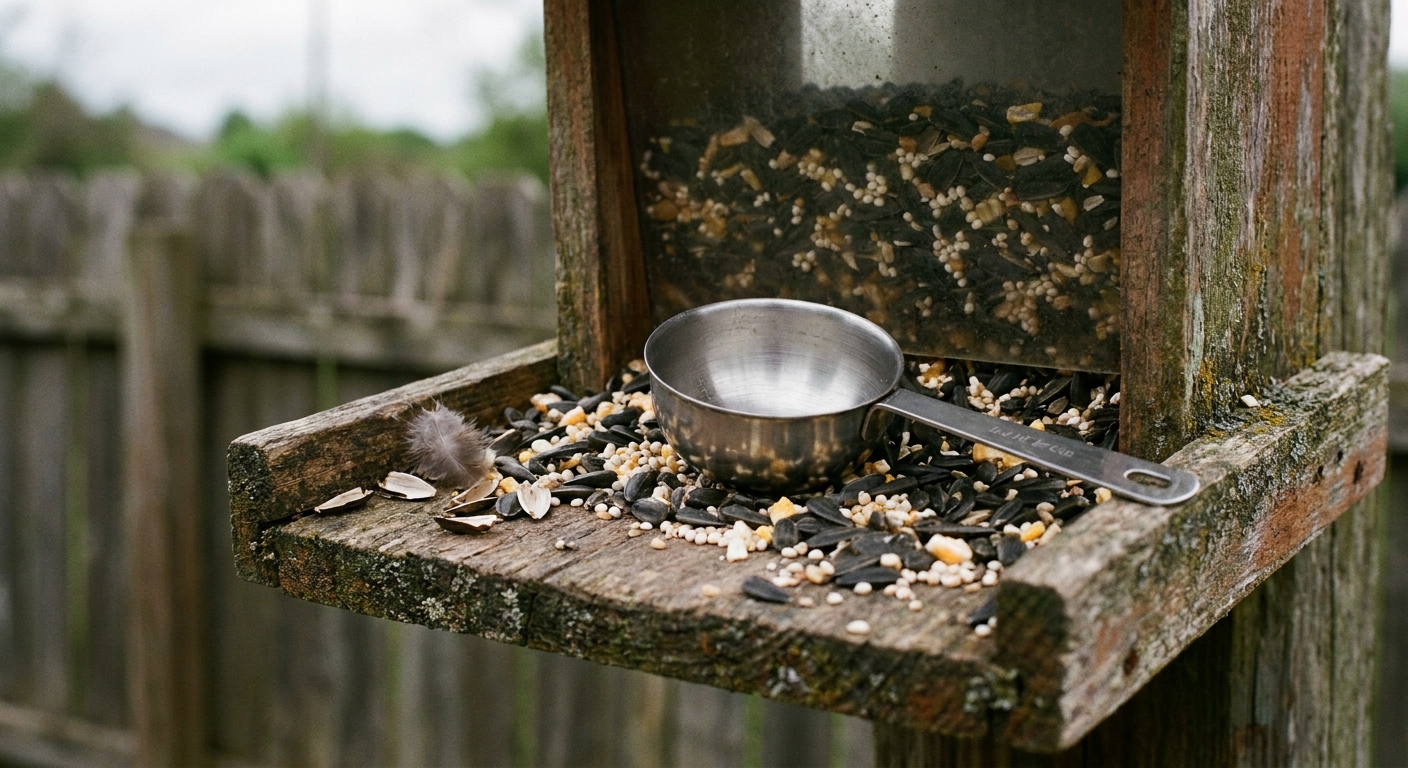
A new Michigan law means the backyard bird feeder you fill each October no longer carries the quiet risk of a misdemeanor citation — as long as it meets two simple conditions.
The change arrived as Public Act 86 of 2026, signed by Gov. Gretchen Whitmer on July 21, 2026, and effective upon filing with the Secretary of State on July 27, 2026.
The two conditions
For a feeder to put a household in the clear, it must meet two tests.
First, the feed must be located within 300 feet of a residence.
Second, the amount of feed placed, scattered, or distributed within 300 feet of that residence — added to any feed previously placed there and still present — must total no more than two gallons.
The two-gallon cap is cumulative across every feeder within that 300-foot zone. Two or three feeders that together hold more than two gallons would not qualify.
In practice, the rule covers recreational feeding and preventing starvation — not hunting bait. A plain backyard arrangement stays inside the lines if it meets the distance and amount tests.
What the old law risked
Under the prior law, feeding wild birds in a way that let white-tailed deer or elk reach the feed could be treated as illegal deer or elk feeding. There was no requirement that the person intended to bait deer — only that deer or elk could get to the feed.
A deer- or elk-feeding violation was a misdemeanor, punishable by a fine of $50 to $500, up to 90 days in jail, or both.
Rep. Ken Borton, Republican of Gaylord, who represents Michigan’s 105th House District, drove the change — and he knows the old rule from the wrong end.
In 2010, Borton says, conservation officers ticketed him for allegedly baiting deer after his backyard “Snowman Cam” — a livestream of his bird-feeding area — showed deer eating near the feeder. The judge dismissed the case. “The judge seemed pretty perplexed as to why the DNR would file such charges and dismissed the case,” Borton said.
“Feeding wildlife should not be a prosecutable offense in Michigan,” Borton said.
He introduced House Bill 4350 with 45 co-sponsors. The House passed it 82-24 on May 14, 2025; the Senate passed a substitute version 36-0 on July 3, 2026; and the House concurred 76-32 the same day.
Earlier efforts met resistance. In 2021, the Michigan Department of Natural Resources opposed similar wildlife-feeding legislation over disease concerns, and Gov. Whitmer previously opposed comparable bills.
What’s still off-limits
The change does not touch baiting deer to take game. Baiting deer for hunting remains prohibited across the entire Lower Peninsula for the 2026 season, on public and private land, with a limited exception for qualifying hunters with disabilities.
The statute also expressly excludes baiting to take game, scattering from normal logging or agricultural practices, and specified agricultural feed storage or use from the definition of feeding.
The Natural Resources Commission can still issue its deer-and-elk feeding order under the amended statute, the Michigan Department of Natural Resources still enforces wildlife-feeding rules, and any order must comply with U.S. Department of Agriculture standards or any state-federal memorandum of understanding for controlling infectious diseases.
The restrictions exist for a reason. Concentrated feed brings deer together unnaturally, increasing close contact and the exchange of saliva and other infectious material — which can spread chronic wasting disease, a fatal contagious disease of deer and other cervids.
Bottom line
For most households, nothing needs to change. Keep the feeder within 300 feet of the home, keep total feed in that zone at or under two gallons, and keep filling it.
Fill the feeder, watch the birds, and leave the worry behind.