Government
GLWA urges statewide water-funding strategy as infrastructure needs hit $85 billion
The authority wants state leaders to treat the $85 billion in needed drinking-water and sewer repairs as a shared obligation rather than leaving ratepayers to cover it alone.
By Staff · October 26, 2026
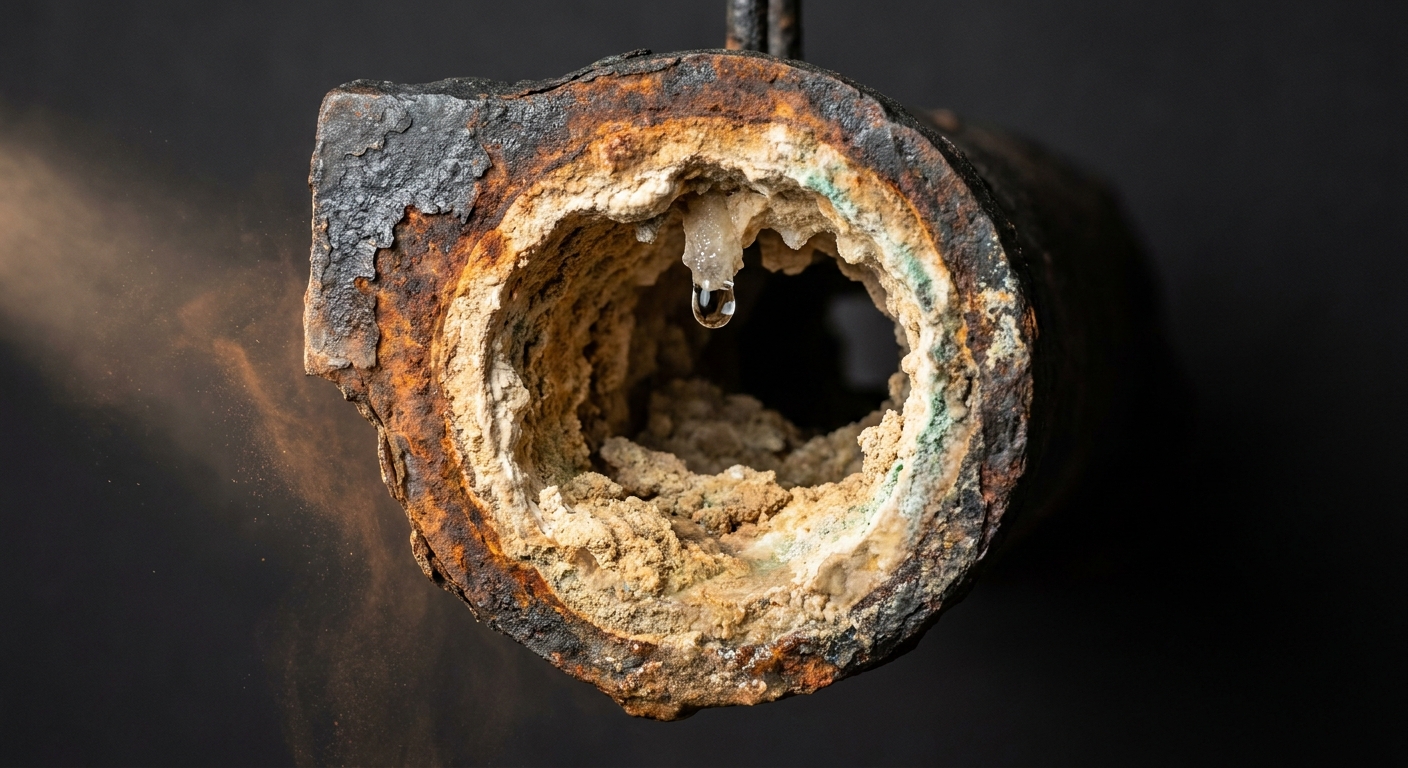
Under the streets of Detroit, the water mains that carry tap water to kitchens and bathrooms are a century old, and replacing just the oldest of them would cost an estimated $1.2 billion. Multiply that need across Michigan's roughly 1,300 water and wastewater systems, and the total reaches up to $85 billion over twenty years — a tab the Great Lakes Water Authority warns cannot keep falling entirely on local water bills.
The authority, which supplies wholesale water and sewer service to much of southeast Michigan, released "The Crisis Beneath Us: The Urgent Need to Invest in Michigan's Water Infrastructure" after a six-month task force studied the state's aging systems, talked with utilities, and examined how other states pay. The findings were presented publicly on Sept. 23, 2026.
Suzanne R. Coffey, GLWA's chief executive officer, said the report answers the question she keeps hearing from state leaders: "Well, how big is the problem, and what can we even do about it?" "Michigan has reached a point where maintaining the water infrastructure millions of people depend on every day cannot be treated as a local problem with a local solution," she said.
What the $85 billion buys
The report estimates the need at up to $85 billion over two decades — about $41 billion for drinking water and $44 billion for wastewater. The work would cover not just pipe replacement but lead-service-line removal, stormwater improvements, PFAS-related work, and ongoing operations and maintenance.
Much of the state's underground system was installed in the 1920s and in the decades after World War II and is now near or beyond its expected 75-to-100-year service life. GLWA's own network has more than 800 miles of transmission mains averaging about 70 to 72 years old.
The need is spread across roughly 1,300 drinking-water and wastewater systems statewide. Many are small operations with limited staffing, aging assets and fragmented data, and they struggle to compete for state and federal grants. The $85 billion figure is not the only estimate: University of Michigan researchers have put the one-time capital need as low as $19.8 billion over 20 years after accounting for planned spending, and as high as $39.6 billion plus about $860 million a year in operations and maintenance.
Bills are already climbing
Michigan runs the MI Clean Water Plan, which combines state and federal money for drinking-water and wastewater projects, and recent state budget proposals have moved to add ongoing annual water-infrastructure funding. The report's argument is not that the state is absent, but that the money is not enough: annual funding falls roughly $1 billion to $5 billion short.
"At the same time, simply passing billions of dollars in additional costs on to local ratepayers is neither sustainable nor realistic," Coffey said.
Rates have already risen 24% over five years as utilities absorb higher chemical, energy, labor, material and construction costs. The authority approved fiscal 2027 wholesale increases of 5.8% for water and 4.26% for wastewater effective July 1, 2026, on a roughly $1 billion budget. Because GLWA sells water to member communities that set their own retail rates, those increases feed down into local bills — for Detroit customers, the GLWA charge is about 47% of the water bill, meaning July's wholesale water increase alone adds roughly 2.7% to the total before the city sets its own rate.
The strain already shows up beyond the meter: the report cites a benchmark that water service costing more than 5% of household income is unaffordable, and finds 6.6% of Michiganders already cross that line. "We see firsthand what happens when critical infrastructure fails: families can be displaced, businesses can close, communities can lose water service, and costs can escalate overnight," Coffey said.
Because the shortfall is a recurring annual gap of $1 billion to $5 billion — not a one-time expense — and the dedicated long-term state revenue source the report urges does not yet exist, the report points toward years of continued upward pressure on water and sewer bills rather than a single jump.
What Lansing could do
The report's central recommendation is a sustainable, long-term state revenue source for water infrastructure, paired with policy changes that improve accountability, statewide data and the flexibility to steer money to the systems with the greatest needs. On the table: state general-obligation or revenue bonds, annual pay-as-you-go appropriations, new or expanded dedicated revenue sources, and possible use of sales-tax or other dedicated funds.
Michigan's existing aid is broader than loans: the MI Clean Water Plan has directed billions to water projects in recent years, and revolving loan funds received $24.9 million in federal capitalization for drinking water and $68.2 million for clean water in fiscal 2026 — money communities borrow and repay through their rates. But what is still missing, the report says, is a permanent, dedicated annual state revenue source that does not depend on federal grants or year-to-year budget action.
"The gap between current spending and the need is huge," said Maggie Pallone, senior vice president at Public Sector Consultants and the report's lead author. "This report gives Michigan a clearer picture of the scale of the challenge and, more importantly, a path toward addressing it," Coffey said.
The task force has delivered its report and its call for a new long-term state revenue source. The next thing to watch is whether state leaders take up the recommendations — which name specific tools such as bonds, annual appropriations and dedicated revenue sources — in legislation and budget proposals. Residents who want a say can follow their state lawmakers and contact them about the funding decision; whether Michigan layers a new revenue source onto the existing MI Clean Water Plan, and on what scale, is a Lansing decision, not one made at the local water department.